
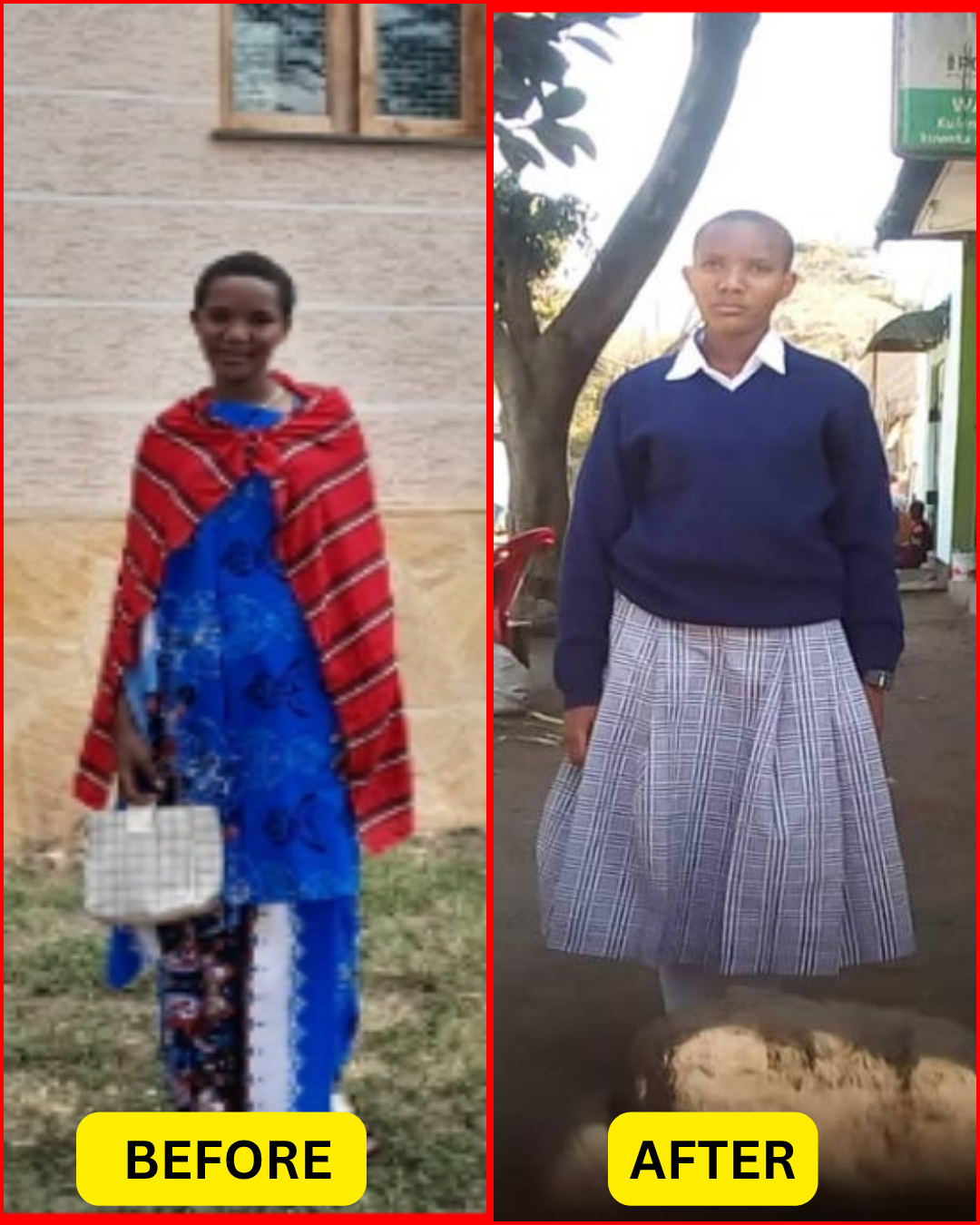
Growing up Maasai
Naipaipai Kaayang Lemiti was raised in a remote Maasai village where traditional cultural practices shape every part of life — including the futures of young girls. Early marriage is not seen as unusual here; for many, it is simply what happens next.
Despite this environment, Naipaipai held onto a different vision. She wanted to go to school, to learn, and to build a life defined by her own choices rather than someone else's expectations.
A forced decision at fourteen
When Naipaipai's father passed away, the family's vulnerability deepened. Her relatives moved quickly, arranging a marriage for her at just 14 years old. In their view, this was tradition — a way to protect the family's honour and ensure her security.
But for Naipaipai, it was the threat of losing everything she had hoped for. Her education, her independence, and her future hung in the balance.
"When courage meets support, even deeply rooted cultural challenges can be transformed into opportunities for education, empowerment, and lasting social change."
A mother's refusal to give up
Naipaipai's mother — a widow facing enormous pressure from relatives and the wider community — refused to accept the arranged marriage. She stood against patriarchal norms that few others would challenge and reached out for external help.
That help came through KINNAPA Development Programme. Legal protection was secured. Counselling and social support followed. Step by step, the pathway back to school was reopened.
Legal protection shielded Naipaipai from the forced marriage. Counselling and psychosocial support helped her rebuild confidence. Community advocacy addressed the deeper cultural pressures that created the risk in the first place.
Scholar, advocate, change-maker
Naipaipai returned to school and has not looked back. She is excelling academically and has become one of the most visible voices for girls' rights in her community — speaking against early marriage and encouraging every girl she meets to pursue education.
Her impact is measurable: more than 20 girls have been inspired to remain in school directly because of her advocacy. Awareness efforts influenced by her journey have contributed to a 15% reduction in early marriage cases in her area.
What began as one family's fight has become a community's shift.
.webp)